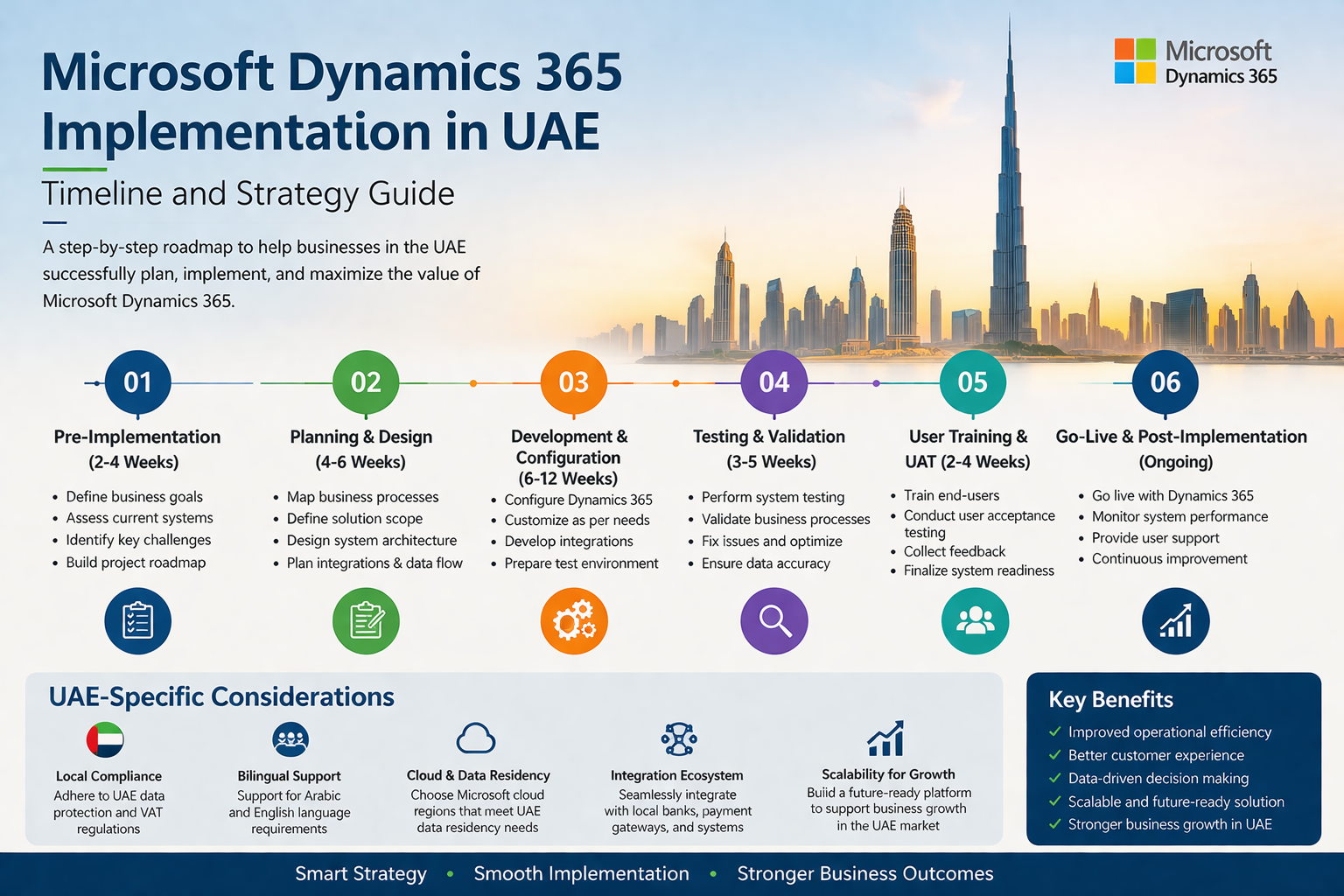
In today’s fast-evolving digital landscape, businesses across the UAE are rapidly adopting advanced enterprise solutions to streamline operations, improve customer engagement, and drive growth. One of the most powerful platforms enabling this transformation is Microsoft Dynamics 365. However, a successful microsoft dynamics 365 implementation in UAE requires a well-defined timeline and a strategic approach tailored to regional business needs.
This guide explores the key phases, timelines, and strategies that organizations in the UAE should consider to ensure a smooth and effective implementation.
Understanding Microsoft Dynamics 365 Implementation
Microsoft Dynamics 365 is a cloud-based suite of business applications that integrates CRM and ERP capabilities. It helps organizations manage sales, finance, operations, customer service, and more within a unified ecosystem. When combined with Microsoft Azure, businesses gain scalability, security, and flexibility—making azure cloud services in UAE a crucial part of the implementation journey.
A successful implementation is not just about deploying software; it involves aligning technology with business goals, processes, and people.
Typical Timeline for Microsoft Dynamics 365 Implementation
The timeline for microsoft dynamics 365 implementation in UAE can vary depending on the size of the organization, complexity of requirements, and customization needs. On average, implementations range from 8 weeks to 6 months.
1. Planning and Requirement Analysis (2–4 Weeks)
This is the foundation phase where businesses define their goals and requirements. Key activities include:
- Identifying business objectives
- Analyzing current systems and workflows
- Defining project scope and budget
- Selecting implementation partners
In the UAE, businesses often require localization features such as VAT compliance, Arabic language support, and region-specific reporting.
2. Solution Design (2–3 Weeks)
During this phase, the implementation team designs a solution tailored to business needs. This includes:
- Mapping business processes to Dynamics 365 modules
- Designing data models and workflows
- Planning integrations with existing systems
- Defining security and compliance requirements
Leveraging azure cloud services in UAE at this stage ensures the infrastructure is scalable and secure.
3. Development and Customization (3–8 Weeks)
This phase involves configuring and customizing the system. Activities include:
- Module configuration (Sales, Finance, Operations, etc.)
- Custom development based on business needs
- Integration with third-party applications
- Data migration from legacy systems
Customization is common in UAE businesses due to unique operational requirements across industries like retail, real estate, and logistics.
4. Testing and Quality Assurance (2–4 Weeks)
Testing ensures that the system functions as expected. This phase includes:
- Unit testing
- System integration testing
- User acceptance testing (UAT)
- Bug fixing and optimization
End-users in the UAE are often involved in UAT to validate real-world usability.
5. Deployment and Go-Live (1–2 Weeks)
Once testing is complete, the system is deployed. Key steps include:
- Final data migration
- User training sessions
- System configuration validation
- Go-live execution
Cloud deployment through azure cloud services in UAE ensures minimal downtime and seamless access.
6. Post-Implementation Support (Ongoing)
After go-live, continuous support is essential. This includes:
- System monitoring
- Performance optimization
- User support and training
- Regular updates and enhancements
Strategic Approach for Successful Implementation
A well-planned strategy is critical for maximizing ROI from your microsoft dynamics 365 implementation in UAE. Below are key strategic considerations:
1. Define Clear Business Objectives
Before starting the implementation, organizations must clearly define what they want to achieve. Whether it’s improving customer experience, automating financial processes, or enhancing reporting capabilities, clear goals ensure better alignment.
2. Choose the Right Implementation Partner
Selecting an experienced partner in the UAE is crucial. A local partner understands regional compliance requirements, cultural nuances, and industry-specific challenges.
3. Leverage Azure Cloud Capabilities
Integrating Dynamics 365 with azure cloud services in UAE provides several advantages:
- High-level data security and compliance
- Scalability for growing businesses
- Advanced analytics and AI capabilities
- Seamless integration with other Microsoft services
This combination ensures a future-ready digital infrastructure.
4. Focus on Change Management
One of the biggest challenges in implementation is user adoption. Businesses should:
- Provide comprehensive training
- Communicate benefits clearly
- Involve employees in the process
This helps reduce resistance and ensures smooth adoption.
5. Prioritize Data Migration and Quality
Data is the backbone of any ERP/CRM system. Ensuring clean, accurate, and well-structured data is essential for successful implementation. Businesses should:
- Clean existing data
- Eliminate duplicates
- Validate data before migration
6. Adopt a Phased Implementation Approach
Instead of deploying all modules at once, many UAE businesses prefer a phased approach. This allows:
- Faster initial deployment
- Reduced risk
- Better user adaptation
For example, starting with CRM modules and later expanding to finance and operations.
7. Ensure Compliance with UAE Regulations
Businesses operating in the UAE must comply with:
- VAT regulations
- Data protection laws
- Industry-specific compliance standards
Dynamics 365 can be configured to meet these requirements, making it a suitable solution for regional businesses.
Top Companies for Microsoft Dynamics 365 Implementation in UAE
1. Cynoteck Technology Solutions
A globally recognized Microsoft Dynamics partner delivering end-to-end implementation services. They specialize in CRM, ERP, and cloud-based solutions tailored for UAE businesses, including VAT compliance and localization.
2. Intwo
A certified Microsoft partner providing comprehensive Dynamics 365 services such as consulting, customization, migration, and ongoing support. Known for scalable and industry-specific solutions.
3. DynamicsSmartz
Offers full-cycle Dynamics 365 implementation including integration, upgrades, and support. Focuses on helping businesses modernize their operations with flexible and cost-effective solutions.
4. Tech Ventures
A well-established provider specializing in Dynamics ERP and CRM solutions such as Business Central, NAV, and AX. Known for delivering high ROI and customized enterprise solutions.
5. DynaTech Consultancy
A Microsoft Gold Partner with strong expertise in Dynamics 365 implementation, migration, and training. They offer reliable post-implementation support and optimization services.
Common Challenges and How to Overcome Them
While implementing Dynamics 365 offers numerous benefits, organizations may face challenges such as:
1. Resistance to Change
Solution: Provide training and involve users early in the process.
2. Integration Complexities
Solution: Use experienced developers and leverage Azure integration tools.
3. Budget Overruns
Solution: Define scope clearly and avoid unnecessary customizations.
4. Data Migration Issues
Solution: Plan and test data migration thoroughly.
Benefits of Microsoft Dynamics 365 Implementation in UAE
A successful microsoft dynamics 365 implementation in UAE delivers several benefits:
- Improved operational efficiency
- Enhanced customer experience
- Real-time data insights
- Better decision-making
- Scalable and flexible business processes
When combined with azure cloud services in UAE, businesses gain a competitive edge through advanced analytics, automation, and secure cloud infrastructure.
Conclusion
Implementing Microsoft Dynamics 365 is a transformative step for businesses in the UAE aiming to stay competitive in a digital-first economy. However, success depends on careful planning, a clear timeline, and a strategic approach.
By leveraging azure cloud services in UAE, choosing the right implementation partner, and focusing on user adoption and data quality, organizations can ensure a smooth and efficient deployment.
Whether you are a small business or a large enterprise, a well-executed microsoft dynamics 365 implementation in UAE can unlock new levels of efficiency, innovation, and growth—positioning your organization for long-term success.